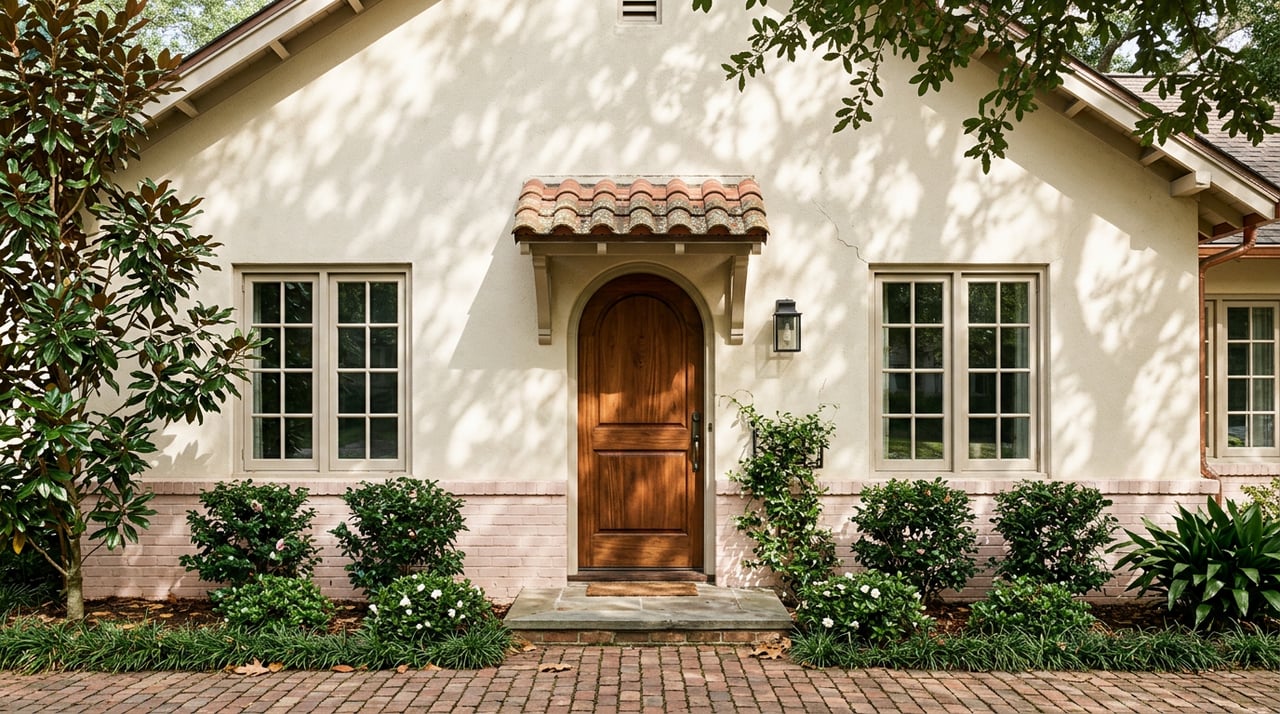
Walk down Kleinert on a Saturday morning and the neighborhood looks the way it did when your grandparents visited. Live oaks arch over the median. A camellia hedge needs trimming. Someone is sweeping a porch. Turn onto Government Street or drop south to Perkins, and the picture shifts. New signage. Renovation permits. A pink building coming back to life. The Garden District has always been described as historic, but the more accurate word for how it works in 2026 is bordered. The commercial energy stays on the perimeter streets. The oaks and the pre-1930 houses stay in the middle. That contract is what the neighborhood is quietly renewing right now.
The Perimeter Is Where The News Is
The Garden District is bounded roughly by Government Street to the north, City Park and Broussard to the south, 18th Street to the west, and St. Rose and Eugene to the east. Almost every recent business change is happening on those edges rather than inside them.
- Eloise Market and Cakery finished its move from Lee Drive to the neighborhood, taking a larger Perkins Road storefront near Hundred Oaks Avenue, next to Billy Heroman's Flowers. The new space added a private party room for cake decorating classes and a fenced yard, which the Lee Drive location never had room for.
- Fleur de Lis Pizza is set to return in spring 2026 to its longtime pink building at 5655 Government Street after closing in 2022. Grant Construction is handling the work and the renovation is being led by Tiek Byday. The original spot opened in 1946 and was one of the city's oldest restaurants before it went dark.
- BLDG 5, the shareable-board restaurant that has anchored the Perkins Overpass corner at 2805 Kalurah Street since 2019, is expanding. A second location is planned for the Jefferson Plaza Shopping Mall in 2026. The original stays put in the Garden District.
- On a smaller scale, one of the city's newer snoball stands, running from a repurposed horse trailer, revived an abandoned Garden District corner with more than thirty flavors.
Read those four together and a pattern emerges. Nothing is moving into the boulevards themselves. Every change is happening on Government, Perkins, or Kalurah, the streets that already carry through-traffic. The interior lots stay residential. That is not an accident of the market. It is the neighborhood plan working as designed.
Why The Middle Stays The Middle
The Garden District is the only Baton Rouge neighborhood the American Planning Association has recognized as a Great Neighborhood, and the reason the designation stuck has less to do with individual houses than with the way the boulevards were laid out. Roseland Terrace, platted in 1910 as Baton Rouge's first subdivision, was designed as a garden suburb: small lots, alleys behind, live oaks and magnolias in the boulevard medians, utility poles tucked back so the streetscape reads as canopy. Drehr Place and Kleinert Place followed the same pattern.
The result is a housing stock that is genuinely old. Roughly 88 percent of houses built in the district before 1930 are still standing, spanning Craftsman bungalows, English cottage, Queen Anne, Tudor Revival, Classical Revival, and Colonial Revival forms. The oldest, the Reiley-Reeves house on the 1900 block, dates to 1910 and remains with the original family.
The Garden District Civic Association, formed in 1976, is what makes that math hold up in practice. The 164 boulevard oaks lining Park Boulevard, Cherokee Street, Kleinert Avenue, and Terrace Avenue are on an active care program the GDCA is raising money for right now. Baton Rouge Garden Club, working through BREC, replanted a live oak in City Park in March 2026 to replace the century-old Garig Oak that died last year. None of that shows up on a listing page. All of it is why the interior lots look the way they do.
The Calendar Residents Actually Plan Around
The Garden District has two active civic organizations that between them run most of what appears on your calendar as "the neighborhood thing this weekend." Bookmark these dates for 2026:
| Event | When | Where |
|---|---|---|
| Wearing of the Green Parade | Mid-March, annually | Park Boulevard, Cherokee, Kleinert, Terrace |
| Summer Splash Party | June 11, 6 to 8 p.m. | Garden District Association |
| Fall Affair | Fall 2026 (40th year) | Garden District Association |
| Easter Egg Hunt | Spring, annually | GDCA-hosted |
| Holiday Lighting Contest | December | Interior boulevards |
| Tour of Homes | Rotating | GDCA-hosted |
The March parade is the one that pulls the biggest crowd, and it uses the boulevard medians as the stage. Longtime resident Lynne Wallace, who has lived in the district for more than thirty years, put it plainly to WBRZ in March: the oaks along Park, Cherokee, Kleinert, and Terrace are what give the parade its name.
The Association side, at gardendistrictassociation.com, tends to focus on the family-first calendar. Summer Splash is a June evening event. Fall Affair, which turns forty this year, is the anchor social. The Civic Association side, at gdcabr.org, leans toward the preservation work and the newsletter.
Where Longtime Residents Still Go
New arrivals matter less than the standing order, so here is the short list that has held up.
For a real dinner: DiGiulio Brothers Italian Café remains the sit-down default. Chow Yum Phat has held its spot on the pan-Asian side. BLDG 5, under the Perkins Overpass at 2805 Kalurah, still does the market-and-kitchen thing with outdoor seating under oak lights and a rooftop bar, and it is the address most residents give when out-of-town guests ask where to go.
For coffee close to home: Garden District Coffee is the walk-to option, and the Perkins Road corridor between the overpass and Hundred Oaks reads, in the current 2026 guides to the Baton Rouge coffee scene, as a distinct local-cafe stretch separate from the Mid City or LSU coffee routes. Magpie Cafe still gets named alongside it.
For a gallery night: Baton Rouge Gallery runs rotating exhibitions in the district and is the piece of the arts calendar that most reliably sits inside the neighborhood rather than downtown.
For a Saturday morning that turns into an afternoon: The Mid City Makers Market, now at Circa 1857 on Government Street just north of the district line, is a five-minute drive or a fifteen-minute walk from most of the interior blocks. It runs monthly and remains the most consistent way to end up buying something you did not plan to buy.
For a very short list of new sweets: Eloise Market and Cakery on Perkins for cakes and cake classes. The Garden District snoball stand for a summer walk-up. Between them the neighborhood's dessert coverage is better than it was two years ago.
What This Means If You Live Here
The takeaway is not that the Garden District is trending. Trending neighborhoods lose their oaks. The takeaway is that a hundred-year-old plan is still doing what it was designed to do, and the people running the two neighborhood associations are still writing checks to keep it that way. New tenants land on Government Street and Perkins Road. The interior boulevards absorb almost none of that pressure. When a business does open on a corner inside the district, it tends to be a snoball trailer rather than a full buildout, and it tends to revive a lot rather than replace a house.
For a resident, the practical version of that thesis is short. Go eat at the new places on the edges. Give money to the oak fund. Show up on Park Boulevard in March. That is the routine that keeps the middle looking like the middle.
If you have been in your house for twenty years and are starting to think about what the next chapter looks like, or if you are curious what a Kleinert bungalow with an intact 1920s footprint would trade at today, the team at Del Rio Real Estate knows this footprint block by block. Schedule a Private Consultation when you are ready for a quiet, unhurried conversation.